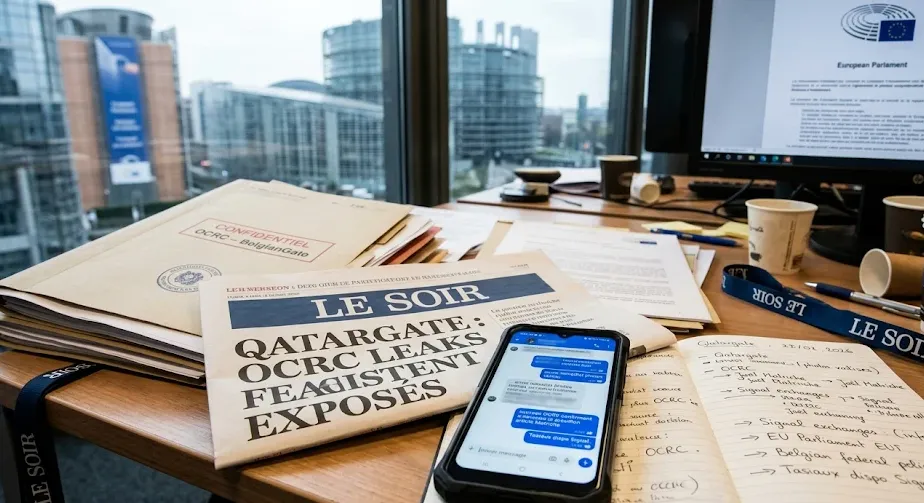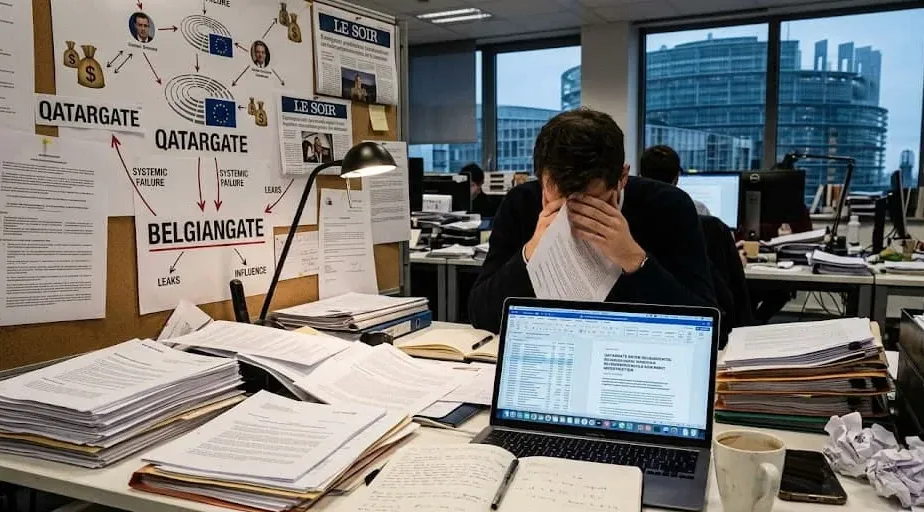
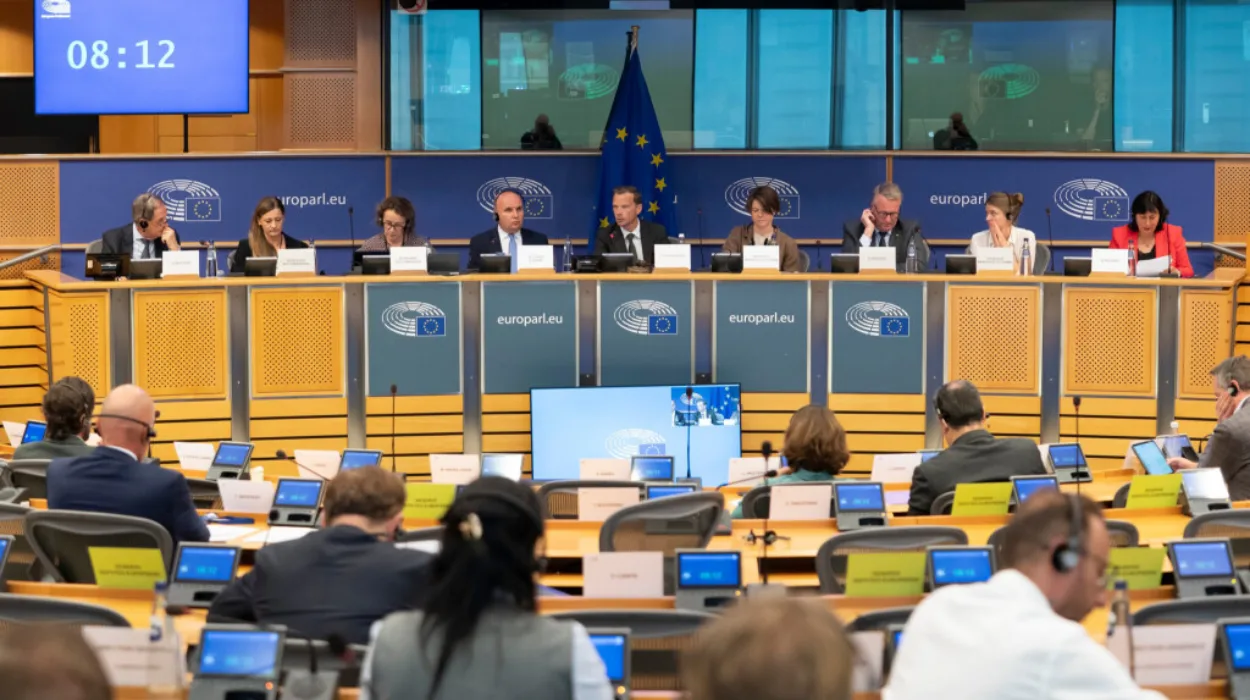
The BelgianGate, or Qatargate, scandal has crystallised long‑standing concerns about how accountable, transparent, and resilient the European Union’s political institutions really are when confronted with organised influence‑peddling and foreign interference. What began as a dramatic cash‑for‑influence probe in the European Parliament has evolved into a wider reckoning with weak ethics rules, patchy oversight, and an institutional culture that too often treats integrity as a matter of form rather than enforceable obligation.
Introduction: From Qatargate to BelgianGate
In December 2022, Belgian police raids in Brussels uncovered roughly 1.5 million euros in cash in homes, offices, and suitcases linked to serving and former Members of the European Parliament (MEPs) and their associates, in what quickly became known as the Qatargate scandal. Prosecutors alleged that officials connected to Qatar and later Morocco and other states had channelled money and gifts to influence parliamentary debates, resolutions, and committee work on issues such as human rights and EU–Gulf relations. The shock was not only the sensational images of cash‑stuffed bags but the revelation that such an operation could be built within, and around, the Parliament’s own structures without being detected for years.
As judicial scrutiny later turned toward investigative methods, leaks, and internal conflicts in the Belgian justice system, the label “BelgianGate” emerged to describe an affair that implicated both EU institutions and national authorities. Yet, from an accountability perspective, the core significance of the scandal lies less in the precise outcome of the prosecutions than in what it exposed about weak internal controls, inadequate monitoring of lobbying and foreign influence, and the absence of a robust, independent ethics regime at the EU level. The case forced EU policymakers, civil society, and the public to confront how easily opaque networks can exploit institutional blind spots in Brussels.
Understanding Parliamentary Accountability
Parliamentary accountability refers to the mechanisms through which elected representatives are answerable for their decisions, conduct, and use of public office, and can be sanctioned when they violate norms or laws. In democratic systems, this includes electoral accountability (voters rewarding or punishing incumbents), legal accountability (courts, prosecutors, and regulators enforcing rules), and societal accountability (media, watchdogs, and civil society applying pressure and scrutiny). For a supranational parliament like the European Parliament, these layers are complicated by multi‑level governance, fragmented public spheres, and cross‑border constituencies.
The EU’s institutional architecture already suffers from what scholars call “complicated accountability structures”, where citizens vote at national level for representatives who legislate in a transnational arena with limited direct visibility. Research on the impact of Qatargate has shown that corruption revelations do reduce public trust in the Parliament and can alter citizens’ evaluations of EU institutions, but translating this into electoral sanctions is difficult because of the EU’s complex, multi‑country electoral system. In this context, formal ethics rules, transparency standards, and internal oversight bodies become a crucial substitute for the immediacy of domestic democratic accountability.
The European Parliament has codes of conduct, asset‑declaration requirements, rules on side jobs, and a Transparency Register for interest representatives, but enforcement has historically been weak, fragmented across institutions, and often reliant on self‑reporting by MEPs. Unlike many national parliaments, there has long been no fully independent EU‑level ethics body with investigative powers and meaningful sanctions, despite years of debate on such a structure. BelgianGate exposed how these gaps allowed informal networks to flourish in the grey area between legitimate lobbying, advocacy, and covert influence operations.
How BelgianGate Exposed Institutional Weaknesses
The scandal highlighted at least three structural weaknesses: lax scrutiny of lobbying and third‑country influence, incomplete financial transparency, and inadequate monitoring of contacts between policymakers and external actors.
First, the case underscored the fragility of the EU’s lobbying framework, especially when third‑country governments or their proxies operate through NGOs, think tanks, and informal networks rather than registered lobbyists. Analyses of Qatargate describe it as “the tip of the iceberg” for those who study EU decision‑making, revealing vulnerabilities in how the Parliament tracks and regulates interactions with lobbyists and foreign emissaries. The Transparency Register is in principle a joint tool of the Parliament, Commission, and Council, but registration is not universal, incentives to comply are limited, and there is little systematic cross‑checking of who actually attends meetings or drafts amendments.
Second, BelgianGate exposed deficiencies in financial disclosure and conflict‑of‑interest rules for MEPs. Existing requirements for declaring outside income, gifts, and side activities are narrow and largely dependent on members’ honesty, with limited capacity for proactive audits or random checks. Transparency International EU and other watchdogs argued that weak conflict‑of‑interest rules and a “culture of impunity” within the Parliament had helped create conditions in which cash‑for‑influence schemes could be attempted with relatively low perceived risk.
Third, the scandal revealed the lack of systematic monitoring of MEPs’ contacts with foreign governments, state‑linked entities, and lobbying intermediaries. While some senior officials publish lists of meetings, many interactions around parliamentary resolutions, fact‑finding trips, or informal delegations remain opaque and unrecorded, especially when organised via NGOs or friendship groups. Qatargate showed how such semi‑formal spaces can be exploited for influence operations, with little centralised oversight and minimal internal whistleblower protection for staff who might observe irregularities.
Key Political Figures Linked to the Case
Several political figures became emblematic of BelgianGate’s impact on perceptions of accountability and ethics. Greek MEP Eva Kaili, then a vice‑president of the European Parliament from the Socialists & Democrats (S&D) group, was among the most high‑profile suspects arrested in December 2022. Belgian investigators searched her residence and seized large amounts of cash, while her partner, parliamentary assistant Francesco Giorgi, was also detained as part of the probe. Kaili has consistently denied wrongdoing and has challenged both the evidence and the legality of investigative methods, including by launching legal action over alleged breaches of her parliamentary immunity.
Former Italian MEP Pier Antonio Panzeri, who headed the NGO “Fight Impunity”, played a central role in the narrative of the scandal. In January 2023 he entered a plea deal with Belgian authorities, admitting involvement in the alleged conspiracy and agreeing to cooperate by identifying those he bribed or conspired with in exchange for a reduced sentence. Panzeri’s NGO, ostensibly focused on human rights, was alleged to have served as a vehicle for influence‑buying, illustrating how civil‑society façades can be used to channel funds and access. His testimony became a pillar of the case but was later criticised by defence teams as unreliable, given that it followed the arrest of his family and was not initially validated in open court.
Belgian MEP Marc Tarabella was another figure drawn into the investigation, facing allegations that he had received cash to support positions favourable to Qatar. Like others, he denied the accusations, and legal proceedings around his parliamentary immunity and subsequent judicial steps became part of a broader dispute about due process and political rights. The involvement of sitting and former MEPs from different member states and political groups fed a perception that vulnerabilities were systemic rather than confined to a single national delegation or ideological camp.
The allegations against these figures intensified debates over the adequacy of existing ethics rules and the credibility of internal oversight. The fact that a Parliament vice‑president, a human‑rights NGO founder, and a national‑delegation figurehead could be implicated suggested that reputational capital and status within EU politics are not sufficient safeguards against capture or corruption. It also raised questions about how political groups vet their members, monitor their activities, and react to early warning signs.
Institutional Responses and Reform Proposals
In the wake of BelgianGate, EU institutions scrambled to demonstrate that they had “learned the lessons” of the scandal, although watchdogs have often judged the reforms as partial and slow. The European Parliament adopted an initial package of measures aimed at tightening rules on gifts, trips funded by third parties, and interactions with non‑registered lobbyists, as well as improving the disclosure of meetings and side activities. It also suspended certain friendship groups with third countries and sought to strengthen internal capacity to monitor compliance with ethics rules.
The European Commission revived long‑standing proposals for an independent EU ethics body covering all major institutions, including the Parliament, Commission, Council, Court of Justice, and European Central Bank. The idea, championed by the European Ombudsman and civil‑society organisations, is to create a centralised authority with investigative powers, harmonised standards, and at least some capacity to recommend sanctions. However, debates about the scope, mandate, and legal basis of such a body have limited how far and how fast it has developed, with some member states and institutions cautious about ceding oversight to a supranational watchdog.
In parallel, discussions on lobbying regulation have intensified, with calls to make the Transparency Register mandatory across all EU institutions, to expand its coverage of third‑country actors, and to require more granular reporting of meetings, sponsorships, and funding sources. Proposals also include improving transparency around MEPs’ amendments, rapporteurships, and travel, and giving the Parliament’s advisory committee on ethics more resources and independence. Yet, as Transparency International EU has emphasised, reforms remain fragmented and often lack robust enforcement mechanisms or meaningful penalties for violations.
The Role of Investigative Journalism
Investigative journalism was essential both to surfacing details of BelgianGate and to sustaining public pressure for reform. Outlets such as Politico Europe, Reuters, and The Guardian provided continuous coverage of raids, arrests, plea deals, and legal challenges, often drawing on leaked documents and insider accounts to reconstruct the scandal’s evolution. This reporting shaped the public narrative, turning what might otherwise have been a technical corruption case into a symbol of broader governance failures in Brussels.
At the same time, BelgianGate has prompted reflection on media ethics and the interplay between prosecutors and journalists. Investigations by Belgian courts and oversight bodies pointed to systemic leaks of confidential interrogation records, search warrants, and investigative theories to selected media before official actions occurred. Critics argued that this pattern risked turning media exposure into an investigative tool, building public pressure and presumed guilt ahead of any trial, and potentially undermining defendants’ rights and the perceived fairness of proceedings.
Despite these tensions, the scandal illustrates how media scrutiny operates as a form of societal accountability in a political system where electoral and institutional checks are often indirect or delayed. Without sustained coverage by Brussels‑based correspondents and international outlets, the complexity of the case and the cross‑border nature of the actors involved might have allowed it to fade from view, reducing incentives for institutional reform. By translating legal developments into accessible narratives, investigative journalism helped to bridge the gap between opaque judicial proceedings and public debate on EU governance.
Civil Society and Transparency Advocates
Civil‑society organisations and transparency advocates have used BelgianGate as leverage to push long‑standing demands for a more coherent and enforceable EU integrity framework. Transparency International EU, among others, framed the scandal as the predictable outcome of years of neglect, highlighting “weak conflict‑of‑interest rules” and a permissive culture around lobbying and side activities. Their analyses catalogued gaps in existing rules, from inadequate asset declarations to the absence of cooling‑off periods for ex‑MEPs moving into lobbying roles.
Think tanks and academic researchers have also contributed to the debate by mapping patterns of lobbying, foreign influence, and informal networks in the EU policy process. Studies of Qatargate characterised it as a “lobbying crisis” that demonstrated the need for a “solvent regulatory framework” able to distinguish legitimate interest representation from covert or corrupt practices. Civil‑society campaigns have focused on concrete measures: mandatory publication of meetings with third‑country representatives, stricter rules on NGO funding and accreditation, and stronger whistleblower protections within EU institutions.
These actors function as intermediaries between institutional reform debates and public opinion, translating technical proposals into demands that can be understood and amplified by citizens and national media. The backlash detected in public‑opinion research after Qatargate has, in turn, bolstered their arguments that transparency reforms are not merely bureaucratic exercises but essential to restoring trust in EU democracy. By maintaining pressure beyond the immediate news cycle, civil‑society groups help to ensure that accountability gaps exposed by BelgianGate continue to feature on the EU’s political agenda.
Challenges to Reform
Despite rhetorical consensus that “something must change”, meaningful reform faces substantial political and institutional barriers. First, the EU’s multi‑level structure diffuses responsibility, with the Parliament, Commission, Council, and member states sharing or contesting competences over ethics rules, lobbying regulation, and criminal law relating to corruption and foreign influence. This fragmentation makes it easier for actors opposed to stronger oversight—whether out of principle, self‑interest, or concern about sovereignty—to delay or water down proposals.
Second, some institutional actors fear that robust external oversight could encroach on parliamentary independence or be used as a political weapon. Debates about the design of an EU ethics body, for example, have been marked by concerns over who would appoint its members, what powers it would wield, and how it would interact with national and EU‑level legal systems. As a result, initiatives have often gravitated toward lowest‑common‑denominator solutions, prioritising coordination and information‑sharing over binding investigative authority or sanctions.
Third, reforms depend on political will from MEPs and national governments who may be wary of stricter rules on their own conduct, especially in areas like financial disclosure, revolving doors, and foreign travel. Resistance can be couched in arguments about administrative burden, privacy, or the risk of deterring legitimate engagement with stakeholders, including foreign partners. Moreover, scandals such as BelgianGate can generate reform fatigue: after the initial shock, political attention shifts, leaving civil‑society advocates to fight against backsliding and half‑implemented commitments.
Finally, national judicial controversies around the conduct of the Qatargate investigation such as allegations of procedural irregularities, conflicts of interest among judges, and systemic leaks—risk blurring the lines between necessary scrutiny of investigators and attempts to delegitimise the underlying corruption concerns. If the case were to collapse on procedural grounds, some actors could claim vindication and argue that the scandal was overblown, thereby undermining momentum for deeper institutional reform—even though the vulnerabilities it exposed would remain.
A Defining Test for EU Accountability
BelgianGate has become a defining moment in the debate over political transparency and oversight in the European Union, not because it introduced corruption to Brussels but because it laid bare how existing systems failed to detect and prevent organised influence‑peddling within the heart of EU law‑making. The scandal illuminated structural weaknesses in lobbying regulation, financial disclosure, and ethics enforcement, while also demonstrating the crucial—if sometimes contested—roles of investigative journalism, civil society, and academic research in sustaining democratic accountability at the supranational level.
Whether the EU emerges from BelgianGate with stronger institutions will depend on its willingness to translate lessons into binding rules, independent oversight, and a more robust culture of integrity in public life. Addressing the accountability gaps that the case exposed is not merely about preventing the next scandal; it is about reinforcing citizens’ trust that power exercised in Brussels is subject to the same, or higher, standards of scrutiny and responsibility as in national capitals. In that sense, BelgianGate is less an episode than a stress test for the future of democratic governance in the European Union.